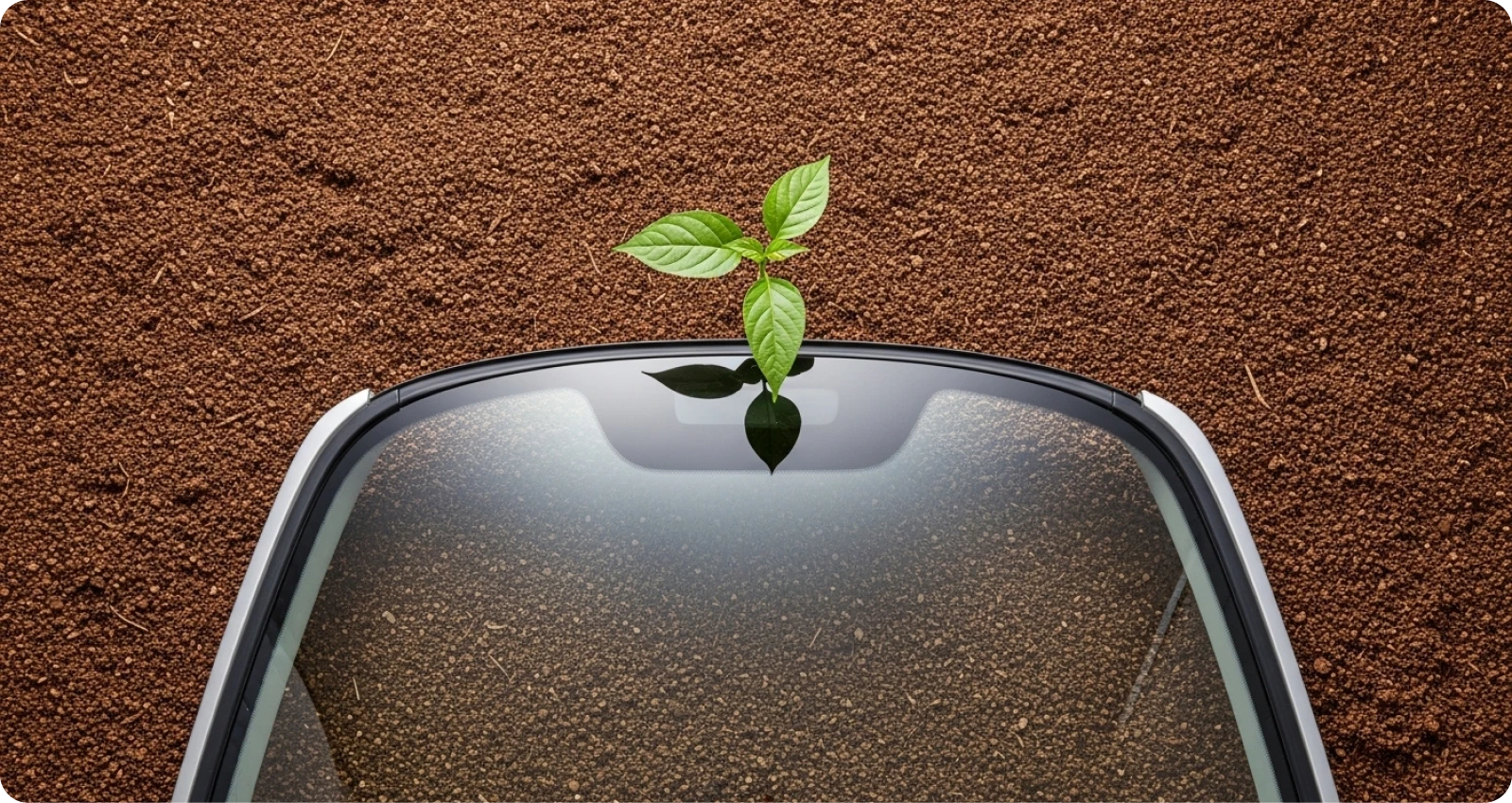
Repairing damaged windshields instead of replacing them is more than just saving costs; it is the most effective way to dramatically reduce the negative impact on the global environment.
Practicing carbon neutrality saves enormous energy and resources required for new glass production and fundamentally prevents the generation of difficult-to-treat waste.
Daonda Auto Glass Co., Ltd.’s “Repair First” principle is not an option — it is an essential responsibility for the future.
Compare the environmental impact of repair versus replacement
0
Reduce CO₂ emissions
(46.2 kg CO₂eq reduction per case)
0
Reduce energy consumption
About $20,000 or more for industrial electricity
0
Waste generation
Difficult to dispose of laminated glass waste
The most powerful practice for ESG management of our partner companies
01
Stop waste at the source
Current recycling systems do not effectively handle automotive glass with its complex structure. Repair is the only way to realize the top principles of the waste management hierarchy - ‘Reduce’ and ‘Reuse’ - and eliminate the generation of waste glass that would otherwise be landfilled or downstream recycled.
02
Build a virtuous cycle of resources
By avoiding unnecessary new glass production, we reduce our carbon footprint from raw material mining to manufacturing to transportation, which positively impacts our partners' entire supply chain and is the first step in creating a virtuous cycle of sustainable resources.
Analysis of Expected Effects from Glass Restoration Implementation
B2B partner personalized proposals
Date: 2026.10.25
💡 Key Summary
Your company's monthly average damaged vehicles 0Public,
about 0대to
(the restoration conversion rate you entered 20Apply %)
When you switch to restore
about 0Cost savings are expected.
1. Detailed Analysis Data
Separation
Domestic car
Imported cars
Total
Monthly average replacement
0건
0건
0건
Expected Recovery Transition
0건
0건
0건
2. Cost savings trend over time
3-month simulation
₩ 0
6-month simulation
₩ 0
1-year simulation
₩ 0
3-year simulation
₩ 0
Estimated savings = A + B
A: Domestic Vehicle Savings = Number of Domestic Vehicle Restorations × [Replacement Unit Cost - Restoration Unit Cost].
B: Imports savings = Imports restored × [Replacement unit cost - Restoration unit cost].