






Automotive Glass PVB Recycling Process

In-depth analysis report on the recycling process of waste automotive windshield PVB resources
1. Introduction: Recycling Challenges for Laminated Glass
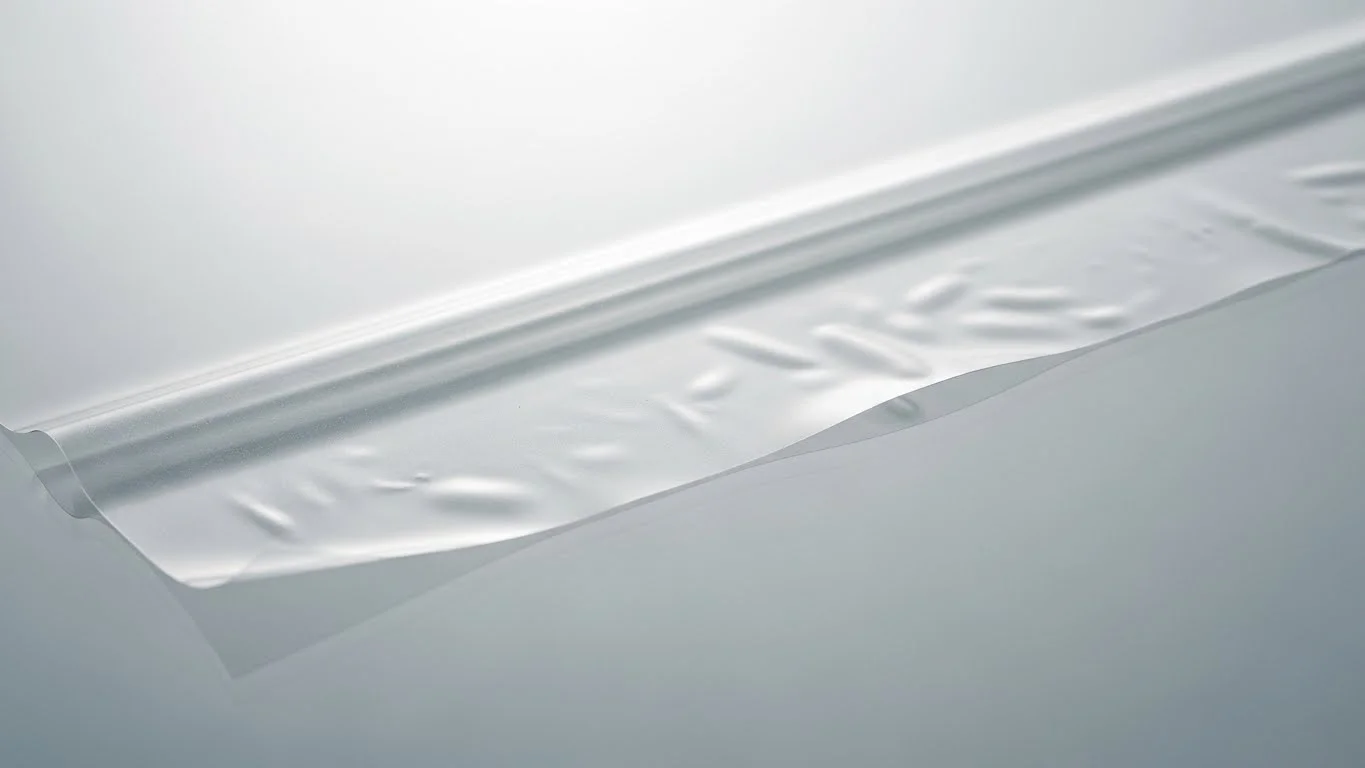
A car windshield is a composite material with a polyvinyl butyral (PVB) film bonded between two layers of glass for safety.1 This PVB interlayer plays a key role in ensuring occupant safety by providing impact resistance, acoustic insulation, and structural integrity.2 However, their strong adhesion and durability make them very difficult and uneconomical to recycle when they are discarded.3
Traditional recycling methods are time-consuming and labor-intensive, and in most cases, discarded laminated glass is simply landfilled or incinerated.3 This creates a serious environmental problem, as PVBs take about 1 million years to degrade in landfills, while also leading to economic losses from wasting valuable recyclable plastic resources.3 Against this backdrop, the development of technologies to effectively separate and purify PVB from waste glass and turn it into a highly pure recyclable resource has emerged as an essential challenge for the transition to a circular economy. In recent years, innovative technologies from leading companies such as Shark Solutions have provided effective solutions to this challenge, redefining the value of waste materials.
2. Core Recycling Process: Conceptual Web UI Flowchart
The PVB recycling process of waste automotive laminated glass consists of four main steps, each of which involves an advanced process to overcome technical difficulties. This report aims to help you understand this complex process by taking a visual approach, like a flowchart in a website user interface (UI). The advanced refining and processing steps that go beyond simple fracking are at the heart of the technology.
2.1. Step 1: Collection and Preprocessing
The first step in the recycling process is the collection and pretreatment of waste glass. Laminated glass is collected through a variety of sources, including auto glass replacement companies, vehicle manufacturers, and junkyards.7 These glasses are bulky and heavy, so an efficient logistics system is crucial. Once collected, the glass is prepared for the next step, which is separation, with some processes opting to process it whole without prior shredding to preserve the PVB film intact.8
2.2. Step 2: Glass-PVB separation
This step is the key to overcoming the strong adhesion of laminated glass.3 Modern technology works by exploiting the brittleness differential between glass and PVB film during shattering.
- Dry Process: Specialized shredding equipment like the FDS1250 9 Or a system with three rollers 10the brittle glass is finely shattered, but the flexible PVB film is left in large chunks. This process is called the “dry process” and efficiently separates the glass cullet with minimal damage to the PVB film.8
- Wet Process: Some techniques use water or chemicals to weaken the adhesion and then use hydrodynamics methods or mechano-chemical separation to aid in separation.11
While the dry process focuses on physical shredding to preserve the shape of the PVB film, the wet process adds chemicals to increase purity. This shows that recycling technology is not just about breaking glass, but strategically utilizing the material's unique properties to increase the purity of the PVB film, which determines the quality of the final product. Both methods have their own advantages and disadvantages, and the decision to choose one over the other is a trade-off between the efficiency of the process, the purity of the final product, and the environmental impact.
2.3. Step 3: Purify and clean the PVBs
PVB films separated from glass still contain microscopic glass fragments and other debris.3 The purification step, which removes these impurities, is the most important process that determines the added value of recycled PVB.
- Mechanical refinement: Friction Rotators 12to remove adhered glass and particulate glass remaining on the PVB film. It works by placing the film and cleaning solution in a rotating vat with a propeller and rotating it to separate impurities through friction.12
- Chemical refinement: Techniques such as flotation separation are used. A fluid with a specific gravity of 1.0 g/ml is used to remove surface dirt and polyolefins, which are then further chemically treated with specific reagents (e.g. 50% glacial acetic acid aqueous solution).10 These processes go beyond simple cleaning and require chemical engineering precision, adhering to a specific temperature (60∘C) and agitation speed (500 r.p.m.) to maximize the purity of the PVB.10
The existence of such sophisticated purification processes suggests that PVB recycling is a complex technological process that goes beyond simple waste disposal. Notably, similar mechanical and chemical purification methods are mentioned in both Korean and US patent literature, demonstrating that this step is a universal key challenge in the production of high-quality recycled PVB.
2.4. Step 4: Processing into the final product
After purification, PVB is finally processed into commercially viable forms. The main product forms are pellets and dispersions.
- Pellets: Solid form
SharkPelletsand is suitable for extrusion molding, with good thermoplasticity and adhesion.14 - Dispersions:
SharkDispersionsis a water-based homogeneous dispersion that is utilized in industries that require binders in liquid form, such as paints and coatings.14
These recycled products are non-toxic and free of halogens and phthalates, which means they can be used in 14, It is becoming an environmentally friendly alternative to hazardous materials like PVC and SBR latex. This shows that recycling is not just about reducing waste, but realizing the value of ‘upcycling" to create products that are better and safer than traditional materials.
3. case study: market leader Shark Solutions
3.1. Proprietary Technology and Business Model
Shark Solutions, a Danish green technology leader, has proprietary technology and production facilities to recycle PVB from waste laminated glass.5 Their core innovation is not only the PVB separation system, but also the conversion of the separated PVB into various high-value raw materials.5
Shark Solutions' business model is exemplified by its partnership with Sibelco.5 Sibelco is a global recycler of approximately 1.5 million tons of glass (including flat, container, and laminated glass) annually. 5, is responsible for the initial step process of separating the glass, metal, ceramic and PVB from the laminated glass. The separated PVB is then delivered to Shark Solutions, where it is converted into pellets and dispersions using proprietary technology.5 This partnership is a prime example of how companies in the circular economy can build more efficient and profitable value chains by focusing on their areas of expertise.
3.2. Product portfolio and market coverage
Shark Solutions' recycled PVB products are categorized into two main categories SharkPellets와 SharkDispersionseach of which has unique characteristics and a wide range of applications.14 The following table compares the key characteristics and applications of the two products.
| Product name | SharkPellets | SharkDispersions |
| Physical form | Solid pellets | Homogeneous aqueous dispersion |
| Recycled Content | 100% Post Consumer Recycled PVB | 100% Post Consumer Recycled PVB |
| Key attributes | - Halogen and phthalate free - Excellent thermoplasticity and adhesion - Compatible with a wide range of thermoplastic/thermoset resins | - Excellent stability - Antimicrobial resistance (pH around 10) - Film-forming and crosslinkable - Compatibility with a wide range of emulsions - Improved durability of waterborne paint/coating systems |
| Key applications | - Carpet Backing - Flooring - Blending Composites and Polymers | - Carpet backing - Paints and coatings - Fabric coatings - Adhesives and sealants - Soundproofing materials |
| Key benefits | - Enhanced sustainability profile - Reduced CO2 emissions - Economically competitive - Non-toxic | - Enhanced sustainability profile - Reduced CO2 emissions - Economically competitive - Non-toxic |
This strategy of offering products in two forms fulfills a variety of market needs in both solid and liquid applications. In particular, the fact that these products offer environmental benefits, such as not containing hazardous substances and reducing carbon dioxide emissions, provides a strong competitive advantage for modern companies that emphasize sustainability and ESG management.14
4. broad industry ecosystem
4.1. End-user innovation: The case of Rooster Paint
That PVB recycling technology is more than just a waste treatment technology is evident in the case of Rooster Paint.18 For the first time in Korea, NOROO Paint has developed a technology to apply binders recycled from waste automobile windshield films to the acrylic emulsion component of its eco-friendly water-based paint ‘Sun&Soo Eco Respect'.18 This technology is a definitive example of the existence of a robust end market for recycled PVB.
These innovations create significant environmental value. NOROO Paint's recycled paint recycles the equivalent of 1.27 cars' worth of PVB film per 18-liter bottle, with 1.5 to 1.7 times the carbon savings of conventional paints.18 This shows that PVB recycling doesn't just reduce waste, it can be integrated into finished products and contribute to real carbon reduction.
4.2. Technology Solution Provider: Sung-An Machinery
Companies like SUNGANN MACHINE form the foundation of the recycling industry by providing shredders, pulverizers, extruders, and various separation systems.21 They are B2B solution providers with specific material separation technologies (e.g. metal-plastic separation, gravity separation, etc.), which provide the essential mechanical basis for complex processes such as PVB recycling.24
4.3. Other Applications of Recycled PVB
Recycled PVB is used in a wide variety of applications beyond paint. Key applications include carpet backing, soundproofing, adhesives, textiles, and building materials. 3, This multifaceted market creates a stable demand for recycled PVB and contributes to the economic stability of the recycling business.
5. economic and environmental value
PVB recycling is more than just an environmental action; it creates clear economic value.3 Waste materials that would otherwise be paid for disposal are transformed into raw materials that generate new revenue, which embodies a key principle of the circular economy. Considering that about 700,000 cars are scrapped in South Korea every year, the economic value of recycling used cars is estimated to exceed KRW 11.5 trillion.4 The efficiency of the PVB recycling process is secured by high separation efficiencies of up to 991 TP3T and low energy consumption.3
In terms of sustainability, PVB recycling demonstrates its impact with specific metrics, including.
- Reduce landfill waste: PVB-containing laminated glass poses a serious problem in landfills, taking 1 million years to degrade, but recycling successfully recycles this waste.5
- Reduce your carbon footprint: Shark Solutions' recycled products save 58,000 tons of CO2 annually and 5, Norupaint's technology achieves 1.5 to 1.7 times the carbon reduction of conventional paints.18
- Resource conservation: One ton of recycled glass saves 1.2 tons of raw materials, specifically 850 kg of sand.6 This directly contributes to the conservation of depleting natural resources.25
6. Conclusion and outlook
The analysis in this report shows that PVB recycling technology for waste automobile windshields has succeeded in overcoming the technical challenges of separating and refining a complex material and establishing a viable circular economy model. The case of Shark Solutions demonstrates that collaboration between specialized companies can create an efficient value chain, while the case of Roe Paint shows that recycled PVB can be successfully integrated as a raw material for marketable end products.
Future challenges include developing technologies for applications that require higher purity, such as the use of recycled PVB in the manufacture of new laminated glass.10 However, the European Union's tightening of regulations on landfill waste 6, Increased consumer demand for sustainable products 26, and ongoing technological innovations such as robotics and AI-powered sorting technologies. 27is expected to fuel the growth of the PVB recycling market. The PVB recycling industry is set to go beyond simple waste management and become a promising future sector that realizes both environmental responsibility and economic value.
Share to social accounts


안녕하십니까.
저희는 국내에서 생산되는 화학 원료를 해외로 수출하는 업체입니다. 주로 정밀화학제품을 취급하는데, 해외에서 재생 PVB를 찾는 업체가 있어 공급 가능성과 현재 상황을 알고 싶습니다.
연락 주시면 고맙겠습니다.